
Shielding the Vulnerable: The Ultimate Guide to Ballistic Blankets for Personal and Public Safety
The technology related to tactical defense has advanced beyond the vest and helmet in today’s unpredictable world. The need to protect people in flexible and deployable ways in both the public and private sectors, in a timely manner, has never been greater as security issues change so quickly in both arenas. The ballistic blanket is one of the more important innovations about this. The highly flexible protective clothing is now being adopted by law enforcement, EMS and corporate security teams for its ability to offer protection from ballistic attacks, fragmentation and explosive debris – all in a package that is easy to wear and easily transported. Knowing the way these blankets operate and in which locations they can be used is a crucial component in anyone’s improvement of safety infrastructure.
The Material Science of Portable Armor
A ballistic blanket may seem like a standard blanket upon first inspection, but this is because the blanket has the ability to offer a combination of thermal performance and ballistic performance. They come in several layers of high performance synthetic fibers, for example, aramid textiles or ultra-high-molecular-weight polyethylene. The layers of woven fabric absorb and dissipate the kinetic energy of the bullet or fragment, stopping it before it can penetrate the barrier, when it comes in contact with the blanket at high speed.
Read More: How Public Relations Builds Long-Term Brand Credibility
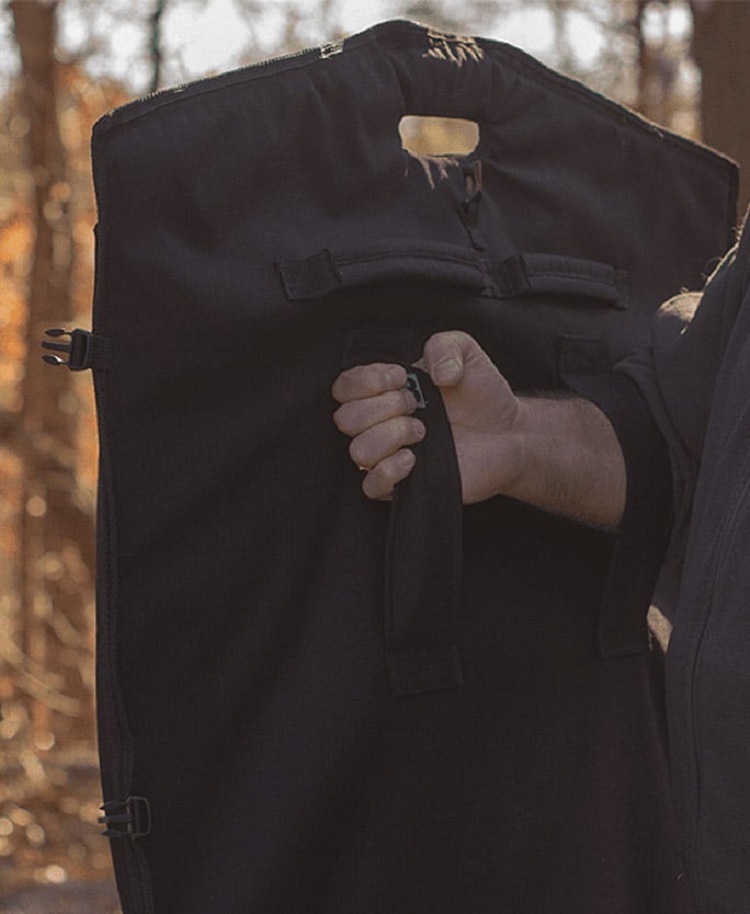
The protective core is surrounded by a durable, waterproof outer shell of specially formulated nylon or polyester to protect it from harsh conditions. This outer layer shields the inner fibers from moisture, UV rays and abrasion, which all have the potential to diminish ballistic performance over time. Many models are also designed with extra durable handles and reinforced waist side eyelets around the perimeter that enable security personnel to carry the blanket easily, hang it from a wall or attach it to a vehicle window for an instant defensive barrier.
Applications in Public Safety and Emergency Response
One of the main benefits of a ballistic blanket is its flexibility, as opposed to body armor worn on the wearer. During active threat situations, the first responders are frequently confronted with injured civilians who are unable to be moved and are totally vulnerable. Ballistic blankets can be used by paramedics or police to form a “mobile corridor” to protect themselves and any injured people from danger of gun shots or flying glass if they have to go into the line of fire for field triage and evacuation.
They are also an essential for bombing squads and explosive ordnance disposal units. If a suspicious package is found in public buildings, technicians are able to carefully cover the object with a ‘blast-mitigation blanket’ or wrap around it. The blanket will absorb the force of the explosion and trap the deadly shrapnel, minimising the damage to the surrounding structure and the risks of injury to any bystanders who may be in the vicinity if the device goes off without being safely defused.
Enhancing Security in Schools and Executive Spaces
In addition to law enforcement, ballistic blankets have become increasingly popular in office buildings, government structures and schools. Schools may not have much physical protection in a lockdown situation in a traditional classroom. A ballistic blanket can be stored in a wall cabinet and be quickly dropped on a door, over a thin drywall partition or over a group of students huddled in a corner.
Read More: 4 Tips to Negotiate the Best Price on Commercial Truck Sales when Buying
These blankets provide a discreet security blanket when it comes to executive protection details, not causing any issues to the public. A blanket can be neatly put on the seat of a VIP transport vehicle and be used as a nice cushion until it is used. In case of ambush or a roadside attack, the security team will be able to immediately spread the blanket over the dignitary or press it against the vehicle windows while the dignitary is being driven out of the area at a high speed to neutralize any ballistic threat.
Conclusion
The ballistic blanket is a key link between the stationary and mobile elements of personal protection. These devices are uniquely designed using a combination of cutting-edge textile engineering and high mobility, rendering them a versatile answer to the multitude of safety challenges in today’s world. Their appeal is that they’re easy to use and easy to deploy, whether they’re being used to keep a blast contained in a crowded airport; to keep emergency personnel safe when operating on a hectic scene; or to be the last line of defense in a corporate office. The more they improve public and private safety, the more it will make sense for them to invest in versatile safety items such as ballistic blankets that will help create a more resilient, secure public and private setting for all.
Leave a Reply
You must be logged in to post a comment.